01Niche tool
Growth percentiles and milestones, decoded
Percentile lines are a map, not a target. This page explains what we plot, what most children can do at each age, what we screen for and the small number of things that should bring you in.

- ChartsWHO to 24 months, CDC after
- Formal screensASQ-3 at 9, 18 and 30 months
- Autism screeningM-CHAT-R/F at 18 and 24 months
- Under threeIowa Early ACCESS, free to families
02
Pick an age
Six bands, each with how growth is plotted at that visit, what most children can do, what we check and what to tell us about.
2 months · 8 weeks
The first visit where the growth curve has enough points to have a shape. Most of this visit is feeding, sleep position and the first big vaccine set.
How we plot growth
- Charts usedWHO 0 to 24 months
- Typical gainAbout 25 to 30 g a day
- Head circumferenceMeasured and plotted every visit
- LengthMeasured lying down on a length board
Most children can
Social
- Calms when picked up or spoken to
- Looks at your face
- Smiles when you talk to or smile at them
Language
- Makes sounds other than crying
- Reacts to loud sounds
Cognitive
- Watches you as you move
- Looks at a toy for several seconds
Movement
- Holds head up when on tummy
- Moves both arms and both legs
- Opens hands briefly
What we check at this visit
- Naked weight, length and head circumference plotted together
- Red reflex, hip stability and femoral pulses
- Feeding history and output
- Edinburgh Postnatal Depression Scale for the parent in the room
Tell us if
- Does not respond to loud sounds
- Does not watch things as they move
- Does not bring hands to mouth
- Cannot hold head up when pushing up on tummy
None of these means something is wrong. They mean book a visit so we can look properly.
9 months · 9 months
The first formal developmental screening visit. We run the ASQ-3, check the hemoglobin drawn at 12 months is planned, and talk about the household becoming mobile.

How we plot growth
- Charts usedWHO 0 to 24 months
- Weight rule of thumbMost babies have roughly doubled birth weight by 4 to 5 months and tripled it by 12
- Crossing percentilesCommon between 6 and 18 months as babies settle onto their own curve
- Screen usedASQ-3 at 9, 18 and 30 months
Most children can
Social
- Is shy or clingy with strangers
- Shows several facial expressions
- Reacts when you leave
Language
- Makes different sounds like mamamama and babababa
- Lifts arms up to be picked up
Cognitive
- Looks for objects when dropped out of sight
- Bangs two things together
Movement
- Sits without support
- Moves things from one hand to the other
- Rakes food toward self
What we check at this visit
- ASQ-3 developmental screen scored in the room
- Instrument-based photoscreening for vision
- Oral exam and fluoride varnish
- Home safety: stairs, outlet covers, window cords, water temperature
Tell us if
- Does not sit with support
- Does not babble
- Does not respond to their own name
- Does not transfer toys from one hand to the other
None of these means something is wrong. They mean book a visit so we can look properly.
18 months · 18 months
The densest visit of the toddler years. ASQ-3, M-CHAT-R/F autism screening, a long vaccine list and the beginning of real language.

How we plot growth
- Charts usedWHO 0 to 24 months
- AppetiteSlows sharply around 12 to 18 months. This is normal and not a feeding failure
- Head circumferenceLast routine plot at 24 months
- Screens usedASQ-3 and M-CHAT-R/F
Most children can
Social
- Moves away from you but checks back
- Points to show you something interesting
- Helps you dress them
Language
- Tries to say three or more words besides mama and dada
- Follows one-step directions without a gesture
Cognitive
- Copies you doing chores
- Plays with toys in a simple way, like pushing a toy car
Movement
- Walks without holding on
- Scribbles
- Drinks from a cup without a lid
- Feeds self with fingers
What we check at this visit
- M-CHAT-R/F, with the structured follow-up interview for medium-risk scores
- ASQ-3 across five domains
- Lead screening reviewed (Iowa recommends 12 and 24 months)
- Fluoride varnish and a first dental home discussion
Tell us if
- Does not point to show you things
- Does not walk
- Does not copy others
- Loses skills they once had
None of these means something is wrong. They mean book a visit so we can look properly.
2 to 3 years · 24 to 36 months
Language should be taking off. We switch from WHO to CDC charts at 24 months and start plotting BMI.
How we plot growth
- Charts usedCDC 2 to 20 years from 24 months
- New measureBMI percentile begins at age 2
- HeightMeasured standing from 24 months, which usually reads shorter than lying down
- Screen usedASQ-3 at 30 months
Most children can
Social
- Notices when others are hurt or upset
- Plays alongside and sometimes with other children
Language
- Says about 50 words by 24 months
- Uses two-word phrases by 24 months
- Is understood by a stranger about half the time at 2 and most of the time at 3
Cognitive
- Uses switches, knobs and buttons on a toy
- Plays with more than one toy at the same time
Movement
- Kicks a ball
- Runs
- Walks up a few stairs with or without help
- Eats with a spoon
What we check at this visit
- BMI percentile plotted and explained
- Blood pressure annually from age 3 with a correctly sized cuff
- Speech intelligibility to a stranger, which is a better screen than word count
- Screen time, sleep routine and toilet learning
Tell us if
- Fewer than 50 words at 24 months
- No two-word phrases at 24 months
- A stranger cannot understand half of what they say at 3
- Loses skills they once had
None of these means something is wrong. They mean book a visit so we can look properly.
4 to 6 years · School entry
The kindergarten readiness window. Vision and hearing testing become formal, and the school entry paperwork starts.
How we plot growth
- Charts usedCDC 2 to 20 years
- Typical growthAbout 2 to 3 inches and 4 to 5 pounds a year
- BMIPlotted annually, interpreted by percentile not by number
- Adiposity reboundBMI normally reaches its lowest point around age 5 to 6 and then rises
Most children can
Social
- Follows rules in a simple game
- Comforts others who are hurt or sad
- Separates without distress
Language
- Tells a story with at least two events
- Answers simple questions about a book
- Says most sounds clearly
Cognitive
- Counts to ten
- Names some letters
- Writes some letters of their name
Movement
- Hops on one foot
- Buttons some buttons
- Holds a pencil between fingers and thumb
What we check at this visit
- Optotype visual acuity and audiometry
- Blood pressure percentile by age, sex and height
- Iowa vision screening certificate for kindergarten entry
- School readiness, sleep and the dental screening certificate deadline
Tell us if
- Speech that a teacher cannot understand
- Cannot hop or hold a pencil
- No interest in playing with other children
- Fails a school vision or hearing screen
None of these means something is wrong. They mean book a visit so we can look properly.
11 to 18 years · Adolescence
Growth becomes fast and uneven, confidentiality becomes real, and mental health screening becomes routine.
How we plot growth
- Charts usedCDC 2 to 20 years, plus Tanner staging
- Peak height velocityTypically around 11 to 12 in girls and 13 to 14 in boys
- ScoliosisForward bend test at the annual visit through the growth spurt
- Screens usedPHQ-9 modified for adolescents and SCARED, annually from 12
Most children can
Independence
- Manages their own medication with supervision
- Knows their own allergies and history
- Can describe their symptoms to a clinician
Mental health
- Has at least one trusted adult outside the home
- Sleeps 8 to 10 hours on school nights
- Has activities outside of school
Health behaviour
- Understands vaping and nicotine risk
- Knows what a concussion is and when to report one
- Has a plan for getting home safely
Transition
- Starts taking part of the visit alone from age 12
- Begins planning the move to adult care around 18 to 21
What we check at this visit
- Confidential time alone with the clinician from age 12
- Depression and anxiety screening, with safety planning where indicated
- Lipid screening once between 17 and 21
- Sports clearance and concussion history
Tell us if
- Any talk of self-harm, which we treat the same day
- A drop in school performance or withdrawal from friends
- No growth over a year during the expected growth spurt
- Fainting or chest pain with exercise
None of these means something is wrong. They mean book a visit so we can look properly.
General information, not medical advice. It is not tailored to your child and it does not replace a visit. Milestones describe what most children do by a given age, not a deadline.
03
Which chart, and why it matters
WHO, birth to 24 months
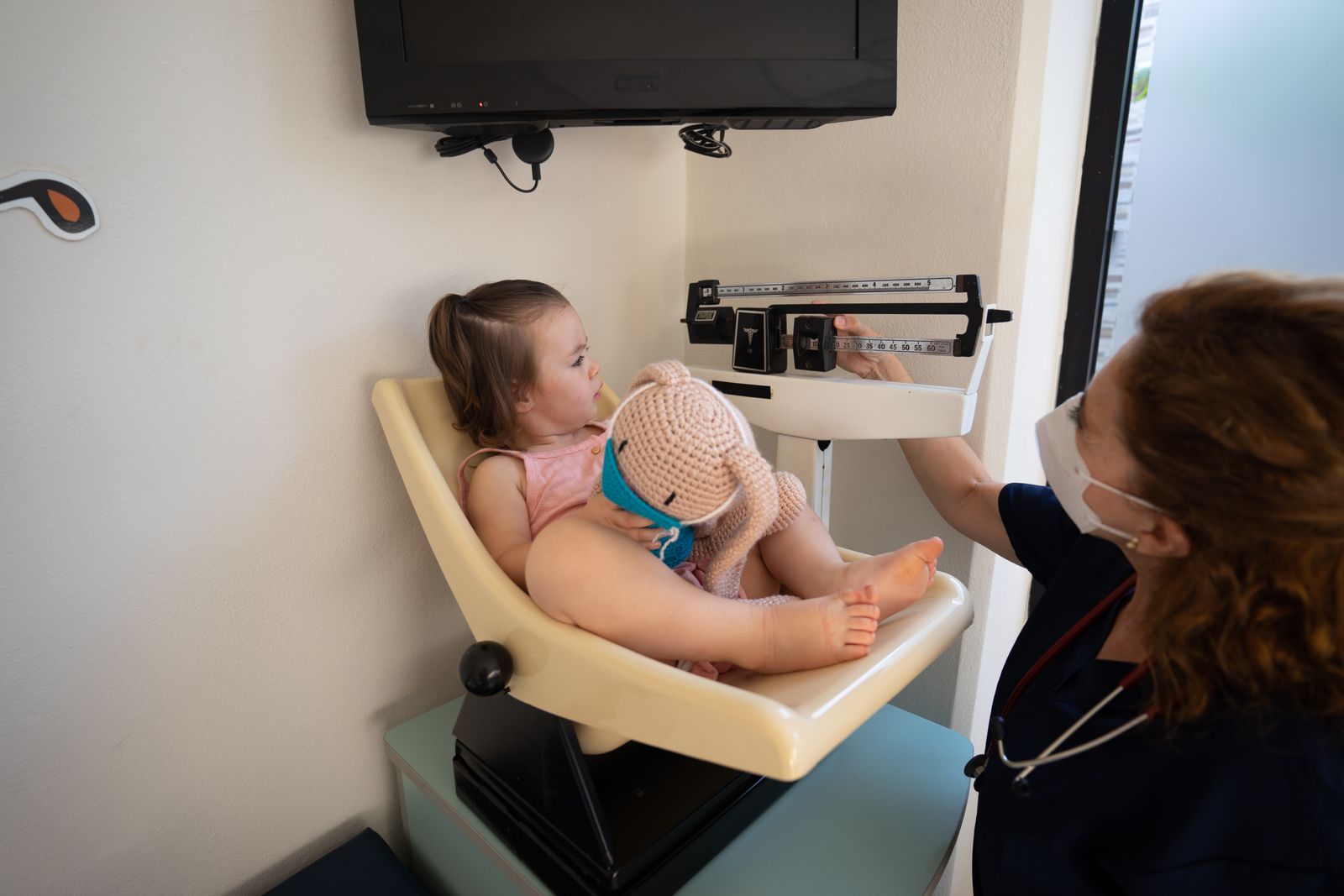
A growth standard: how healthy, breastfed infants in optimal conditions actually grow. We use it for every child under two.
CDC, 2 to 20 years
A growth reference: how American children did grow in a reference population. We switch at the 24 month visit, which is why the line can appear to jump.
Length to height
Under two we measure lying down on a length board. From two we measure standing, which typically reads about half an inch shorter on the same child.
BMI percentile
Plotted from age two. A child's BMI number on its own means nothing; it has to be read as a percentile for age and sex.
04
What gets screened, and when
The Bright Futures periodicity schedule as we run it. Screening is the whole reason well visits exist.
| Visit | What the visit is for | Screening |
|---|---|---|
| 3 to 5 days | Weight, jaundice, feeding, newborn screen results | Transcutaneous bilirubin, weight trend |
| 1 month | Weight gain, sleep position, parent mood | Edinburgh Postnatal Depression Scale |
| 2 months | Social smile, tummy time, feeding volumes | Growth, EPDS |
| 4 months | Rolling, drooling, sleep consolidation | Growth, EPDS |
| 6 months | Starting solids, teething, early peanut introduction | Growth, EPDS |
| 9 months | Sitting, babbling, object permanence, home safety | ASQ-3, vision photoscreen |
| 12 months | First steps, whole milk, first dental home | Hemoglobin, lead, ASQ if flagged |
| 15 months | Words, tantrums, weaning from the bottle | Growth, oral health |
| 18 months | Pointing, pretend play, language explosion | ASQ-3 and M-CHAT-R/F |
| 24 months | Two-word phrases, BMI begins, toilet learning | M-CHAT-R/F, lead, BMI |
| 30 months | Speech intelligibility, play with other children | ASQ-3 |
| 3 to 6 years | School readiness, vision, hearing, blood pressure | Acuity, audiometry, blood pressure percentile |
| 7 to 10 years | Sports, screen time, friendships, puberty questions | Lipid panel once between 9 and 11, BMI |
| 11 to 14 years | Confidential time begins, sleep, mood, sports | PHQ-9 modified for adolescents, SCARED, scoliosis |
| 15 to 21 years | Independence, driving, transition to adult care | Depression, substance use, lipid panel once at 17 to 21 |
General information, not medical advice. It is not tailored to your child and it does not replace a visit.
If something is behind, we do not wait and see
The strongest predictor of outcome in a developmental delay is how early intervention starts. Under three, Iowa Early ACCESS evaluates at no cost to families and does not need a diagnosis. After three, the referral goes to your school district's evaluation team.

05
Questions parents ask about growth
If this is a medical emergency, or your child is struggling to breathe, unresponsive, having a seizure, or badly injured, call 911 now. Call 911.
Usually not. Between birth and about 18 months most babies shift as they move from their birth size onto their genetic curve. We look at the shape of the whole curve, the weight-for-length relationship, and how your child is feeding and moving. A drop of two major lines, or any drop in the height curve, is what makes us look harder.
Growth rate falls sharply after the first year, so toddlers genuinely need less food than they did as babies. Appetite falling off around 12 to 18 months is the single most common reason parents worry about weight, and it is almost always normal. Bring it up at the visit and we will plot it together.
Losing a skill your child already had is always worth a call, at any age. So is no pointing by 18 months, no two-word phrases by 24 months, or a stranger not understanding half of what your three-year-old says.
No. Iowa Early ACCESS takes referrals for children under three without a diagnosis and evaluation is free to families. We make the referral the same day you ask for it.
It is plotted at every visit to 24 months. Crossing lines in either direction in the first year is one of the few growth findings we act on quickly, because it can be the first sign of something structural.
Bring the question to a real appointment
Growth and development questions deserve a proper slot, not the last four minutes of a sick visit. Ask for an extended appointment when you request one.